Introduction: Why Japanese Study Benefits from Manga Romance
The Magic of Manga for Language Learners
Traditional textbooks provide a crucial foundation for learning Japanese, but supplementing your study with authentic materials can significantly accelerate your progress and engagement. Manga, Japanese comics, offers a unique and effective resource for language learners for several compelling reasons.
Firstly, manga immerses you in authentic Japanese as it is written by native speakers for a native audience. Unlike the sometimes stilted language found in textbooks, manga exposes you to natural conversational flow, everyday expressions, common slang, and informal speech patterns frequently used in real life. This exposure helps bridge the gap between structured lessons and spontaneous communication.
Secondly, the visual nature of manga provides powerful contextual support. Illustrations depicting characters’ actions, expressions, and environments offer valuable clues to the meaning of unfamiliar words and phrases. This visual context aids comprehension and significantly improves memory retention, acting like integrated flashcards within an engaging narrative.
Finally, manga serves as a window into Japanese culture and society. Stories often depict aspects of daily life, school routines, workplace dynamics, social norms, and cultural traditions, enriching your understanding of the context in which the language is used.
Romance Manga: A Potent Tool for Everyday Japanese
While manga across various genres can be beneficial, romance manga holds particular advantages for language learners, especially those at the beginner to intermediate stages.
The situations depicted in romance stories frequently mirror everyday life – attending school, navigating friendships, expressing feelings, making plans, offering apologies. This focus on relatable scenarios ensures that the vocabulary and grammatical structures you encounter are highly practical and directly applicable to your own potential conversations.
Furthermore, the emotional core of romance narratives enhances engagement and motivation. Following the development of relationships, empathizing with characters’ joys and sorrows, and anticipating resolutions keeps you invested in the story. This emotional connection transforms language learning from a chore into an enjoyable experience, making you want to understand the dialogue and narrative. Manga artists often excel at visually conveying emotions, further strengthening the link between feelings and the language used to express them.
Selection Criteria: Choosing Manga for Language Learning
The manga recommended in this guide were selected based on several criteria designed to maximize their effectiveness as language learning tools for beginner to intermediate learners (roughly corresponding to JLPT N5-N3 levels).
Easy-to-Follow Japanese (Generally)
The primary focus was on titles that predominantly use clear, common vocabulary and relatively straightforward sentence structures. However, it’s important to recognize that authentic manga utilizes real-world Japanese, which includes casual contractions, slang, and sentence fragments not always covered in introductory textbooks. While the selected manga aim for accessibility, you should anticipate encountering these natural elements, which provide valuable exposure to how Japanese is actually spoken. A foundational understanding of basic grammar and vocabulary is beneficial.
Pictures That Speak Volumes
Strong visual storytelling is essential. The chosen manga feature artwork that effectively complements the text, providing context clues that aid comprehension, especially when encountering unfamiliar language.
Talk Like a Native (Eventually!)
Emphasis was placed on manga featuring natural-sounding dialogue and expressions common in daily Japanese life. These stories offer exposure to practical, conversational Japanese.
Stories That Keep You Hooked
Engaging plots and relatable character emotions are vital for maintaining motivation. Learning is more effective when it’s enjoyable, and a captivating story encourages consistent reading practice.
The Furigana Factor
Furigana – the small hiragana characters printed above or beside kanji to indicate pronunciation – is an invaluable aid for language learners, significantly lowering the barrier to reading complex characters. However, its presence is not universal in manga.
Generally, manga aimed at younger audiences, such as those published in shojo (young girls) and shonen (young boys) magazines, tend to include full furigana. Conversely, manga targeted at older audiences, like those in seinen (young men) and josei (women) magazines, often omit it, assuming a higher level of kanji literacy. The expected presence or absence of furigana, based on the manga’s demographic and publisher information, will be noted for each recommendation to help you choose titles appropriate for your reading level and tolerance for looking up kanji.
Recommendations: 5 Romance Manga to Fall For
Based on the criteria above, here are five romance manga suitable for Japanese language learners:
1. Kimi ni Todoke: From Me to You (君に届け)
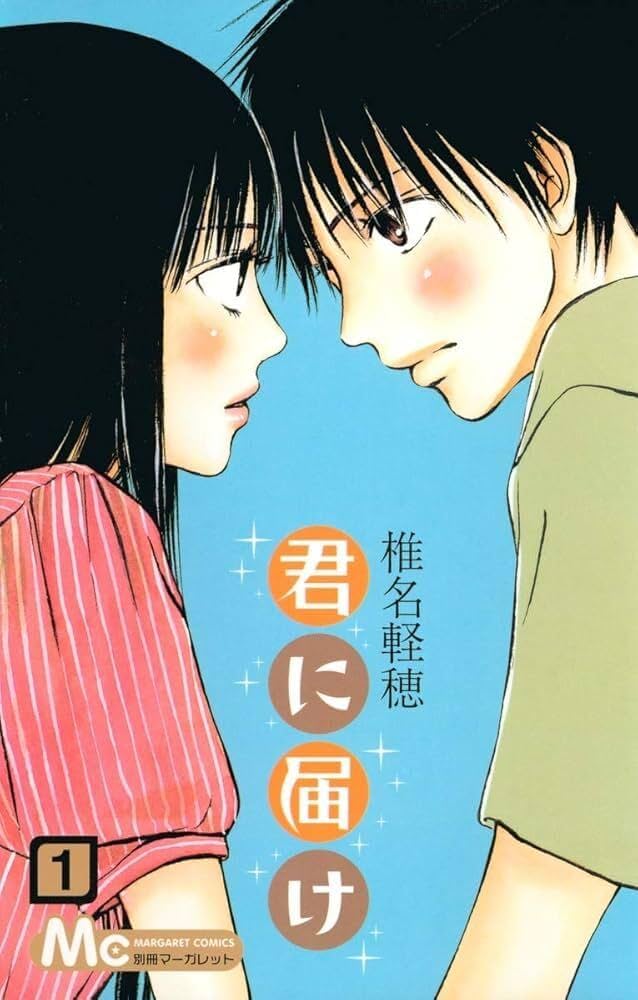
The Story: Sawako Kuronuma, a shy high school student often misunderstood due to her resemblance to a horror movie character, earns the nickname “Sadako.” Her life begins to change when the popular and friendly Shota Kazehaya starts talking to her, sparking new friendships, social challenges, and the beginnings of a sweet romance.
Learning Highlights: As a classic shojo manga serialized in Bessatsu Margaret and published in English by VIZ Media’s Shojo Beat imprint, Kimi ni Todoke is highly likely to feature full furigana. This makes it exceptionally accessible for beginners. The story revolves around high school life, the nuances of friendship, and overcoming misunderstandings, providing ample exposure to common daily vocabulary, typical social interactions among teens, and language used to express a wide range of emotions. The Japanese used is generally straightforward, gentle, and characteristic of the shojo genre.
Difficulty Feel: Beginner-Friendly.
Japanese You’ll Learn:
- “ありがとう。” (Arigatou.) – “Thank you.” (A fundamental expression Sawako uses often as she connects with others).
- “おはよう!” (Ohayou!) – “Good morning!” (Essential greeting in a school setting).
Personal Thoughts: I absolutely adore how cute and dedicated Sawako is – she’s genuinely so kind and always prioritizes her friends, which makes you want to cheer for her success. Her reserved personality and how people misunderstand her because of her appearance is something I could partially relate to from my own past. What I love most is how realistically the manga portrays the evolution of friendship, romance, and those heart-fluttering moments of developing feelings. The emotional progression feels incredibly natural and heartwarming to read.
The Japanese language used is perfect for learners since it’s mostly casual student language without too much slang or complicated expressions. The illustrations are beautiful too, and since it’s been adapted into both an anime series and a live-action film, it’s quite a famous work that even male readers can enjoy without hesitation. I’d definitely recommend it as a starting point for manga-based learning!
Get Reading: An official English version is published by VIZ Media. Both English and Japanese versions are available digitally on Kindle.
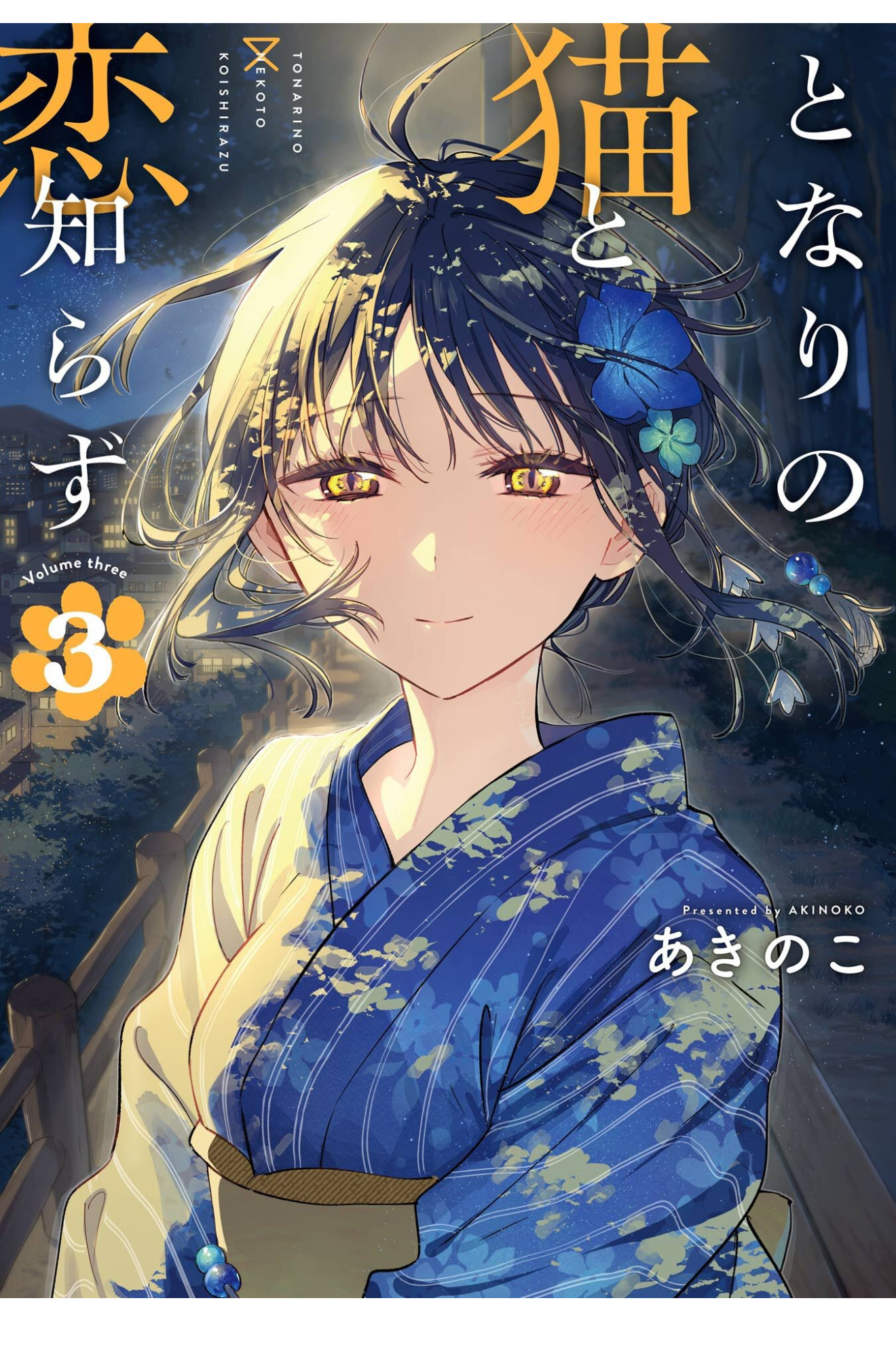
2. Learning to Love My Cat-like Classmate (となりの猫と恋知らず)
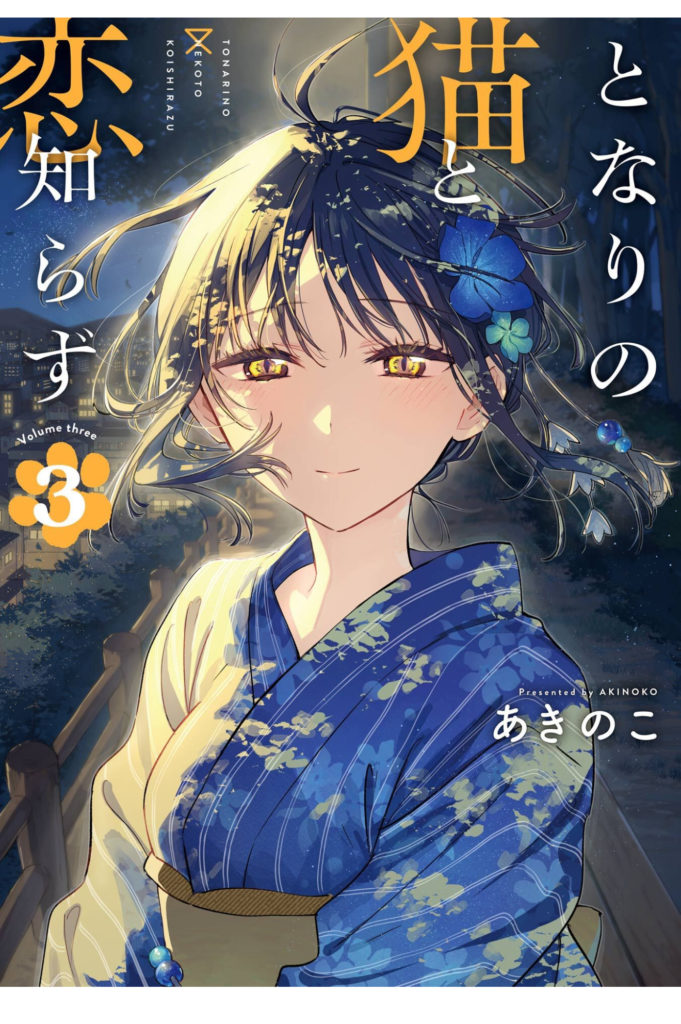
The Story: Timid first-year high school student Minato Seno is tasked by his teacher to look after Mugi Nekozane, the girl who sits next to him and constantly naps, resembling a cat. When he finally musters the courage to wake her, she unexpectedly hugs him, initiating an awkward but sweet relationship between the socially anxious boy and the sleepy girl.
Learning Highlights: This is a seinen romantic comedy, originally a Twitter webcomic before being serialized in Square Enix’s Monthly Big Gangan. As a seinen title aimed at a young adult male audience, it is unlikely to have comprehensive furigana. This makes it more suitable for learners who have some kanji knowledge or are comfortable using digital dictionaries or look-up tools frequently. The manga focuses on quirky high school interactions, depicting shyness and the gradual development of feelings. The dialogue likely features contemporary, casual Japanese speech patterns used by teenagers.
Difficulty Feel: Lower-Intermediate (primarily due to the potential lack of furigana).
Japanese You’ll Learn:
- “えっ!?” (E!?) – “Eh!?” (A very common expression of surprise or confusion, fitting for awkward situations).
- “ごめん。” (Gomen.) – “Sorry.” (A casual apology often used between peers).
Personal Thoughts: The artwork in this manga is absolutely gorgeous—one of the most beautiful I’ve seen. It’s a school romance, but both characters are incredibly shy about their feelings, not even sure if they’re experiencing friendship or romance. What makes this manga special is its slow, gentle pace where their relationship develops one tiny step at a time.
There isn’t much text, making it easier to understand, and even when you don’t understand every word, the expressive illustrations help convey the meaning. It’s completely peaceful—no villains, no mean-spirited characters, just a pure story that’s comfortable to read. Yet despite its serene nature, there are moments that make your heart suddenly race with excitement. The combination of peaceful atmosphere with sudden heart-fluttering moments keeps you completely engaged in their story.
Get Reading: An official English version is published digitally on Square Enix’s Manga UP! Global service. The original Japanese version is available digitally on Kindle and in physical volumes.
3. Smoking Behind the Supermarket with You (スーパーの裏でヤニ吸うふたり)
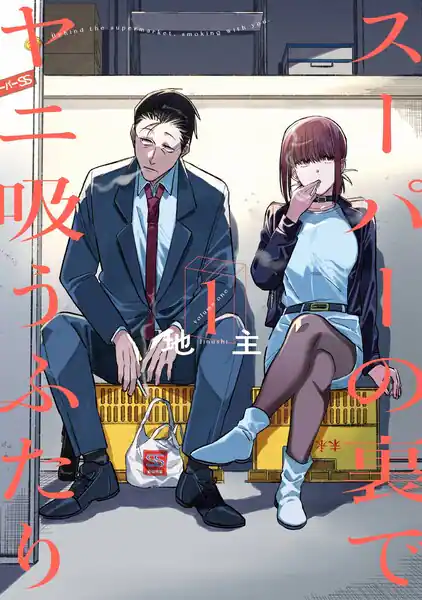
The Story: Sasaki, a weary 45-year-old salaryman, finds his only daily comfort in the cheerful smile of Yamada, a cashier at his local supermarket. One evening, after missing her shift, he encounters a cool, leather-jacketed woman named Tayama who invites him for smoke breaks behind the store. Sasaki enjoys their relaxing chats, completely unaware that the teasing Tayama and the angelic Yamada are the same person.
Learning Highlights: This manga is also a seinen romantic comedy serialized in Monthly Big Gangan. Similar to Tonari no Neko, it is unlikely to feature full furigana, positioning it for intermediate learners or beginners utilizing digital reading aids. The setting provides exposure to conversations between adults in both workplace (Sasaki’s office) and casual (behind the supermarket) contexts. It’s particularly useful for observing contrasts between polite language (potentially Sasaki’s internal monologue or interactions with superiors) and informal, relaxed speech (Sasaki and Tayama’s chats). Vocabulary related to work life, daily fatigue, and simple social interactions is prevalent. The dual identity of the female lead offers a natural way to see different speech styles.
Difficulty Feel: Lower-Intermediate to Intermediate.
Japanese You’ll Learn:
- “お疲れ様です。” (Otsukaresamadesu.) – “Thank you for your hard work / Good work.” (An indispensable phrase in Japanese work culture, used as a greeting, farewell, and expression of appreciation for effort).
- “ここで一服しませんか?” (Kokodeippukushimasenka?) – “Won’t you have a smoke break here?” (A context-specific invitation using the polite negative question form ~masenka?).
Personal Thoughts: This is my absolute favorite among all these recommendations! Unlike the school romances, this focuses on adult relationships, portrayed in a wonderfully comical way. Despite being an adult romance, there’s absolutely no sexual content whatsoever—it’s purely comedic and heartwarming.
Foreign readers might not be familiar with the concept of “社畜” (shachiku, corporate livestock/corporate slave), but the main character perfectly embodies this Japanese work culture phenomenon—a diligent, kind-hearted man who works excessive overtime and even comes in on holidays. The story sounds simple—just two people smoking and chatting—but it’s surprisingly engaging and entertaining! The protagonist is so excessively kind and humble that you can’t help but root for him.
I love how both characters slowly develop feelings for each other while feeling confused about these new emotions. The manga is genuinely funny throughout, making language learning enjoyable. While the vocabulary differs from student-focused manga, it offers invaluable insights into Japanese work culture. There might be slightly more text than the other recommendations, but there aren’t many difficult words. I wholeheartedly recommend this manga—it’s probably a better investment in your Japanese learning than any textbook!
Get Reading: An official English version is published by Square Enix Manga & Books. Both English and Japanese versions are available digitally on Kindle. The series is also available on the Manga UP! Global app.
4. Teasing Master Takagi-san (からかい上手の高木さん)
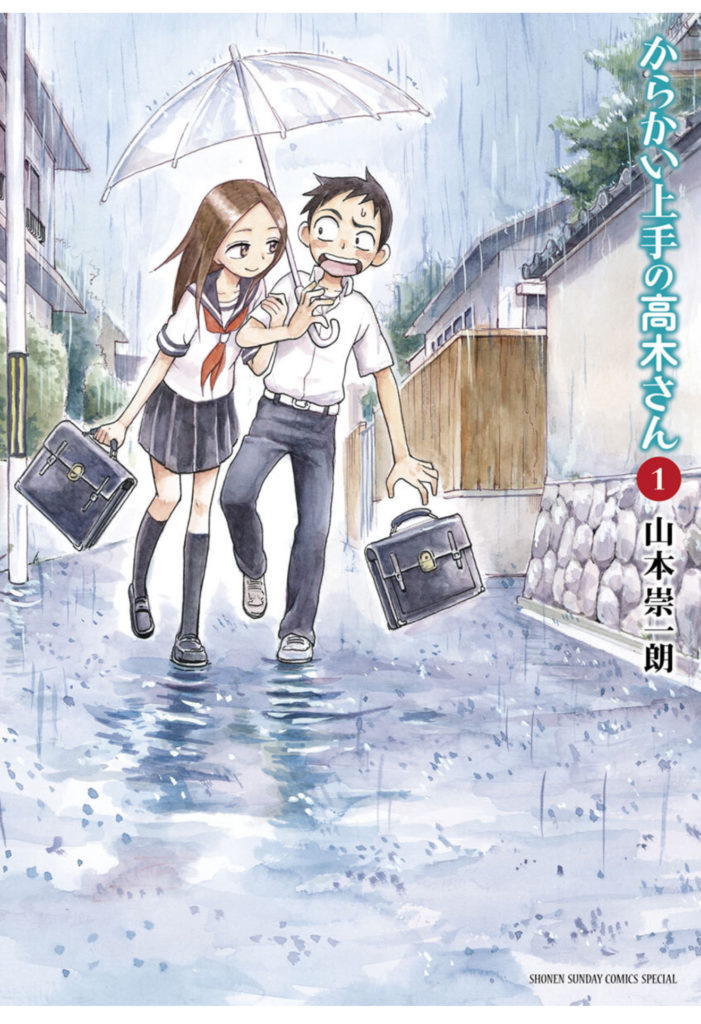
The Story: Middle schooler Nishikata is constantly teased by his clever classmate, Takagi, who sits next to him. He spends his days plotting revenge, but Takagi always anticipates his moves and turns the tables. Their daily back-and-forth forms the basis of this incredibly popular and wholesome comedy.
Learning Highlights: Classified as a shonen manga (serialized in Monthly Shōnen Sunday), Teasing Master Takagi-san features full furigana, making it highly suitable for beginners. The story consists of short, episodic chapters focused on simple, repetitive interactions between the two main characters. This format is ideal for learning basic sentence structures, common question words (like “why,” “what,” “how”), everyday verbs and adjectives, and the playful language used in banter. The text density per page is generally low, preventing overwhelm. The anime adaptation is also often recommended for listening practice due to its clarity.
Difficulty Feel: Very Beginner-Friendly.
Japanese You’ll Learn:
- “なんで?” (Nande?) – “Why?” (A fundamental and frequently used question word in their interactions).
- “勝負だ!” (Shoubuda!) – “It’s a match! / Let’s compete!” (Central theme of Nishikata trying to ‘win’ against Takagi).
Personal Thoughts: I became completely addicted to this manga! One big advantage is that each chapter is self-contained, making it much easier to read than longer narrative arcs. Yet while each episode stands alone, there’s a subtle continuity that creates a relaxed, heartwarming school romance.
The competitions between the characters might seem childish, but they’re surprisingly entertaining to follow. The language used is wonderfully simple and straightforward, making it perfect for beginners. The cute art style and character designs are very appealing too.
What makes this particularly good for Japanese learners is the accessibility—you can easily read just one episode on your Kindle or other digital device whenever you have a spare moment. It’s the perfect casual learning material that doesn’t feel like studying at all!
Get Reading: An official English version is published by Yen Press. Both English and Japanese versions are available digitally on Kindle.
5. My Happy Marriage (わたしの幸せな結婚)
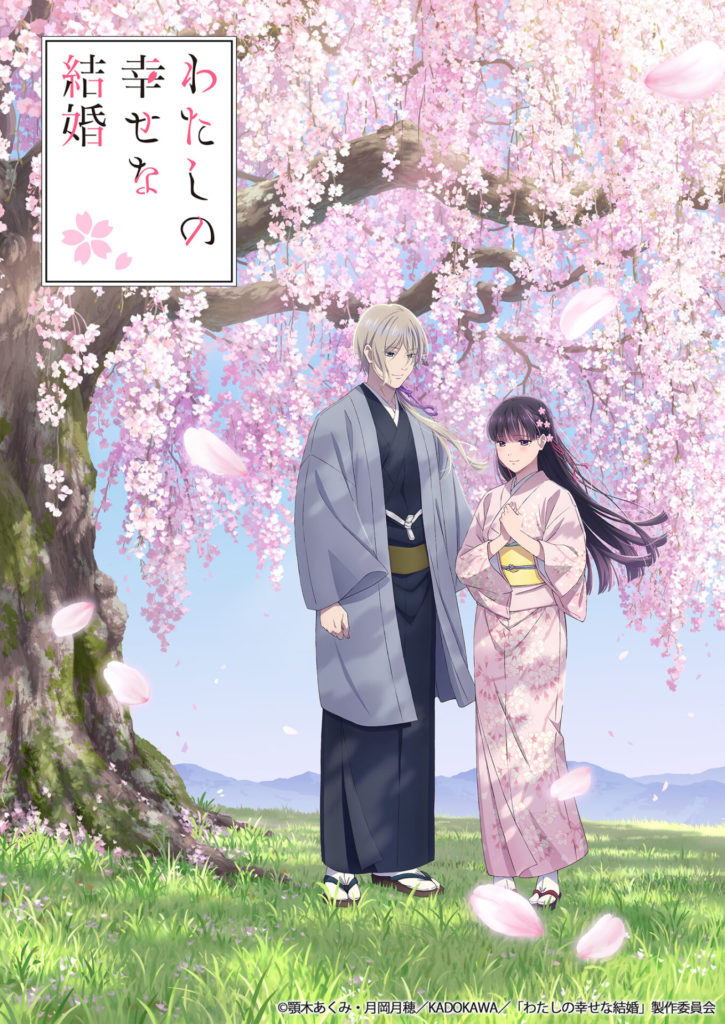
The Story: Set in an alternate Taishō era Japan where supernatural abilities exist, Miyo Saimori is born without powers into a noble family. Treated as a servant by her abusive stepmother and half-sister, she is married off to Kiyoka Kudou, a feared military commander whose previous fiancées fled. Resigned to a grim fate, Miyo discovers her husband-to-be might not be the monster she expected, opening a path to potential love and happiness.
Learning Highlights: This series originated as a light novel and has been adapted into manga, anime, and live-action. While dealing with fantasy and historical elements, the manga adaptation, published by Square Enix Manga, reportedly includes full furigana. This inclusion, possibly a standard for the publisher or aimed at broadening the audience, makes the potentially more complex language accessible even for beginners. The story offers a different setting than the typical school-life romance, exposing learners to more formal and polite language (keigo), particularly in Miyo’s initial interactions, alongside vocabulary related to historical settings and supernatural abilities. The core romantic development still provides relatable emotional language.
Difficulty Feel: Beginner-Intermediate (Furigana aids accessibility, but the historical/fantasy setting and polite language add layers compared to modern school stories).
Japanese You’ll Learn:
- “旦那様” (Danna−sama) – “My Lord / Master / Husband-to-be” (Miyo’s respectful term for Kiyoka, highlighting status difference and formality).
- “はい。” (Hai.) – “Yes.” (The standard polite affirmative, crucial in formal interactions).
Personal Thoughts: This beautifully illustrated, emotionally resonant story blends Cinderella themes with historical fantasy. It provides a unique learning opportunity to encounter more formal language and a different setting, made accessible by the presence of furigana. It’s a great choice for learners wanting to branch out from contemporary slice-of-life.
Manga Quick Comparison Guide
To help select the best starting point, here’s a quick comparison:
| Title | Genre/Demographic | Typical Furigana? | Difficulty Feel | Key Learning Aspect |
|---|---|---|---|---|
| Kimi ni Todoke | Shojo | Yes (Likely) | Beginner-Friendly | School life, emotions, friendships |
| Learning to Love My Cat-like Classmate | Seinen | No (Likely) | Lower-Intermediate | Modern casual teen speech, quirky interactions |
| Smoking Behind the Supermarket with You | Seinen | No (Likely) | Lower-Intermediate+ | Adult conversation, work/casual contrast |
| Teasing Master Takagi-san | Shonen | Yes | Very Beginner-Friendly | Simple dialogue, repetition, banter |
| My Happy Marriage | Fantasy/Historical | Yes (Reported) | Beginner-Intermediate | Polite language, historical setting |
Maximize Your Manga Learning: Smart Study Tips
Simply reading manga passively offers some benefits, but active engagement transforms it into a powerful study tool. To truly leverage these romance manga for language acquisition, consider incorporating these strategies:
Read Actively, Not Passively
Go beyond just following the plot. Pay conscious attention to how sentences are constructed, the specific vocabulary used, and the nuances of grammar. Ask yourself why a certain particle or verb form was used. This active analysis significantly boosts retention compared to passive consumption.
Your Phrase Companion (Vocabulary Notebook)
Maintain a dedicated notebook, digital document, or app for recording new linguistic discoveries. When encountering an unfamiliar word, kanji, or useful phrase, jot it down. Crucially, include context – note the situation, the speaker, and ideally, the full sentence it appeared in. This contextual information aids recall far better than isolated word lists. Regularly review these notes. Tools like Spaced Repetition Systems (SRS) – flashcard software like Anki or features within apps like MochiKanji – are highly effective for committing vocabulary to long-term memory through scheduled reviews.
Sound It Out (Read Aloud)
Practice reading the characters’ dialogue aloud. This helps improve pronunciation, natural intonation, and speaking rhythm. It physically trains the mouth to produce Japanese sounds. For added benefit, try recording yourself and comparing it to native speaker audio if available (e.g., from an anime adaptation).
Embrace the Story (Motivation)
Remember that enjoyment is a key advantage of using manga. Allow the engaging narrative and character development to fuel the learning process. If studying feels like a chore that detracts from the story, it can become counterproductive. Find a balance where learning enhances enjoyment, and enjoyment sustains learning.
Don’t Aim for 100% Understanding (Especially at First)
It is perfectly normal, and even expected, not to understand every single word or grammatical point immediately, particularly when starting out. Focus on grasping the main idea using the dialogue and the invaluable visual context provided by the illustrations. Trying to meticulously look up every unknown element can lead to burnout and frustration. Aim for gradual improvement and celebrate small victories in comprehension.
Use Bilingual Editions or Translations as a Reference
While relying solely on translations hinders learning, having an official English version of the manga available can be a useful tool for cross-referencing when completely stuck on a particular phrase or passage. Use it sparingly as a support, not a crutch.
Conclusion: Start Your Heartfelt Japanese Learning Journey!
Manga, particularly within the romance genre, offers a fantastic pathway to learning practical, everyday Japanese in a way that is both effective and genuinely enjoyable. By combining authentic language exposure, supportive visual context, and emotionally engaging narratives, these comics can significantly boost motivation and complement traditional study methods.
The key lies in selecting titles appropriate for your current learning level – considering factors like language complexity and the presence of furigana – and engaging with the material actively. Don’t feel pressured to tackle everything at once. Choose one manga from the recommendations that sparks your interest, start with just a few pages a day, and utilize the study tips provided.
Learning Japanese can be a rewarding, and even heartwarming, experience. Let these stories inspire your journey. 頑張って! (Ganbatte! – Do your best!)
Which of these manga appeals to you the most? Do you have a favorite Japanese manga that has helped your language learning? I’d love to hear about your experiences and recommendations in the comments below!


コメント